
Dashboard warning lights guide: what each light means and whether you can drive
10 min read · Published 20 October 2026
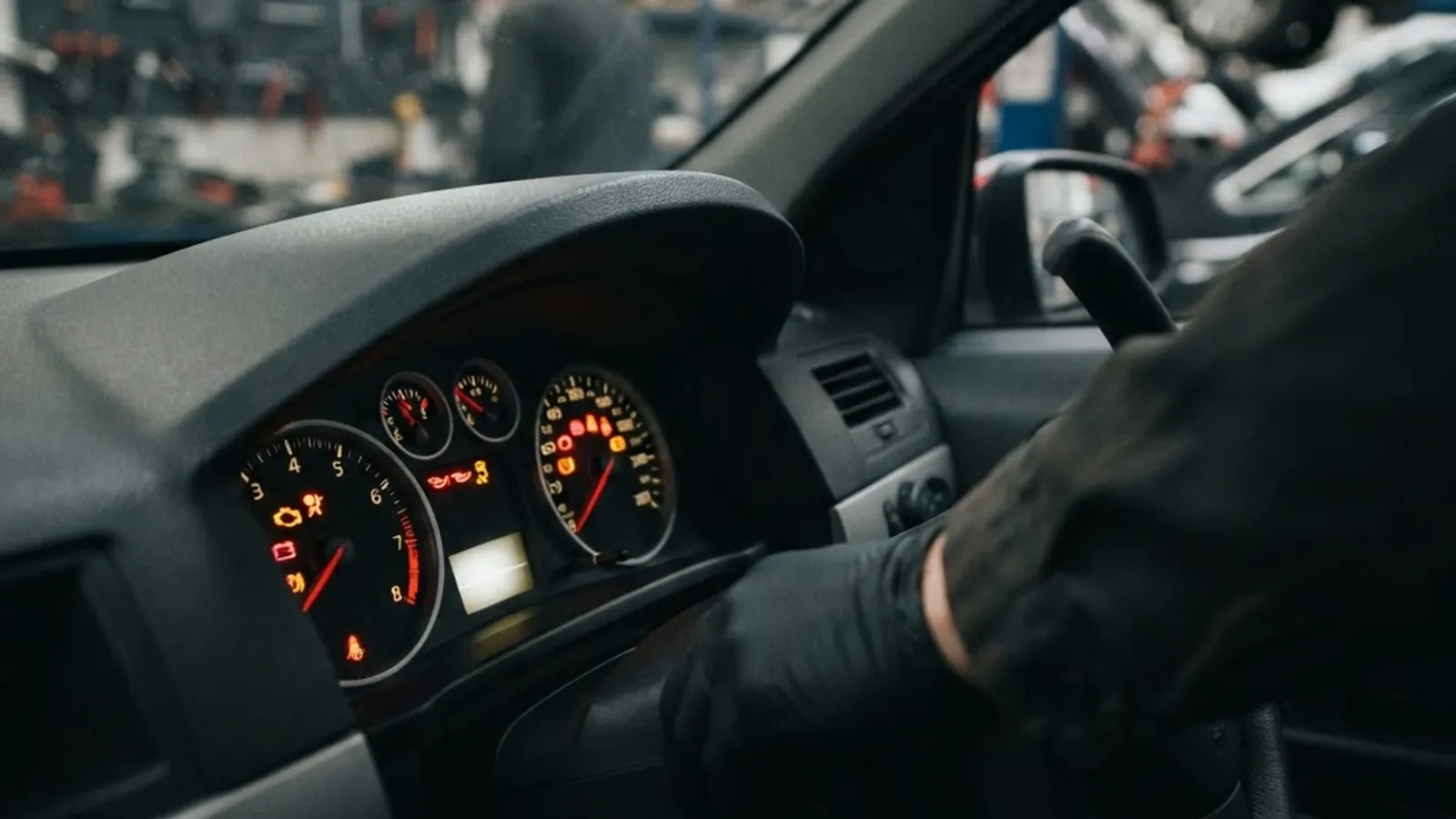
A red warning light means stop safely; an amber light means book a diagnostic check soon; green or blue means a system is simply switched on. Find the light or message below, check whether it is safe to keep driving, and follow the next step. If you are unsure, stop somewhere safe and call us on 07494 227487.
How to read the colours
| Colour | Meaning | What to do |
|---|---|---|
| Red | A safety risk or a risk of serious engine damage | Pull over when safe, switch off, get advice before driving on |
| Amber | A fault has been stored | Usually drivable with care; book a diagnostic check soon |
| Green / blue | A system is on and working | No action needed |
Red
- Meaning
- A safety risk or a risk of serious engine damage
- What to do
- Pull over when safe, switch off, get advice before driving on
Amber
- Meaning
- A fault has been stored
- What to do
- Usually drivable with care; book a diagnostic check soon
Green / blue
- Meaning
- A system is on and working
- What to do
- No action needed
A flashing light is more urgent than a steady one. Symbols differ slightly between makes, so your handbook has the exact version for your car.
Red warning lights: stop safely
Red lights warn of a safety risk or engine damage. Do not ignore them.
| Light | Can I drive? | What it means | What to do |
|---|---|---|---|
| Oil pressure (oil can) | Stop now | Engine oil pressure is too low; the engine is not lubricated properly | Pull over and switch off immediately. Check the oil level once cool. If the level is fine or the light stays on, do not restart; a few minutes can destroy the engine |
| Engine temperature / coolant (thermometer) | Stop now | The engine is overheating or coolant is low | Stop and switch off. Never open the coolant cap while hot. Leaks, water pump, thermostat or cooling fan faults are common; driving on risks head gasket damage |
| Brake system (circle with !) | Stop now | Brake fluid is low, the parking brake is on, or there is a brake system fault, including the brake booster | Check the parking brake is fully off. If the light stays on, do not drive. Some models also store brake booster code C123EF0 (hydraulic brake booster limit exceeded). Have the car recovered or call us for a mobile diagnosis |
| Battery / charging (battery) | To safety only | The battery is not being charged: usually alternator, drive belt or wiring | Turn off non-essential electrics and go straight to a garage or home. The car runs until the battery is flat. A snapped belt can also affect steering and cooling |
| Airbag / SRS (seated figure) | Book urgently | Fault in the airbag or seatbelt pre-tensioner system; airbags may not deploy | The car drives normally but you are not protected as designed. MOT failure. Common causes: under-seat connectors, clock spring, stored crash data |
| Power steering (steering wheel with !) | With care | Power assistance has failed or is reduced | Steering works but is very heavy at low speed. Drive slowly to safety; restart once, as low battery voltage can trigger it. If it stays on, get it diagnosed |
| Seatbelt reminder | Fasten belt | A seatbelt is not fastened | Fasten all belts. If it stays on, the buckle switch or seat sensor may be faulty (MOT failure) |
| Door / boot / bonnet open | Check first | Something is not fully closed | Close it properly. If all is shut, a latch switch is likely faulty, which can also upset interior lights and locking |
Oil pressure (oil can)
- Can I drive?
- Stop now
- What it means
- Engine oil pressure is too low; the engine is not lubricated properly
- What to do
- Pull over and switch off immediately. Check the oil level once cool. If the level is fine or the light stays on, do not restart; a few minutes can destroy the engine
Engine temperature / coolant (thermometer)
- Can I drive?
- Stop now
- What it means
- The engine is overheating or coolant is low
- What to do
- Stop and switch off. Never open the coolant cap while hot. Leaks, water pump, thermostat or cooling fan faults are common; driving on risks head gasket damage
Brake system (circle with !)
- Can I drive?
- Stop now
- What it means
- Brake fluid is low, the parking brake is on, or there is a brake system fault, including the brake booster
- What to do
- Check the parking brake is fully off. If the light stays on, do not drive. Some models also store brake booster code C123EF0 (hydraulic brake booster limit exceeded). Have the car recovered or call us for a mobile diagnosis
Battery / charging (battery)
- Can I drive?
- To safety only
- What it means
- The battery is not being charged: usually alternator, drive belt or wiring
- What to do
- Turn off non-essential electrics and go straight to a garage or home. The car runs until the battery is flat. A snapped belt can also affect steering and cooling
Airbag / SRS (seated figure)
- Can I drive?
- Book urgently
- What it means
- Fault in the airbag or seatbelt pre-tensioner system; airbags may not deploy
- What to do
- The car drives normally but you are not protected as designed. MOT failure. Common causes: under-seat connectors, clock spring, stored crash data
Power steering (steering wheel with !)
- Can I drive?
- With care
- What it means
- Power assistance has failed or is reduced
- What to do
- Steering works but is very heavy at low speed. Drive slowly to safety; restart once, as low battery voltage can trigger it. If it stays on, get it diagnosed
Seatbelt reminder
- Can I drive?
- Fasten belt
- What it means
- A seatbelt is not fastened
- What to do
- Fasten all belts. If it stays on, the buckle switch or seat sensor may be faulty (MOT failure)
Door / boot / bonnet open
- Can I drive?
- Check first
- What it means
- Something is not fully closed
- What to do
- Close it properly. If all is shut, a latch switch is likely faulty, which can also upset interior lights and locking
Amber warning lights: book it in
Amber lights mean a fault has been stored. Most cars are drivable with care, but leaving the fault usually makes the repair dearer.
| Light | Can I drive? | What it means | What to do |
|---|---|---|---|
| Engine management (engine outline) | Steady: book in. Flashing: slow down | The engine computer has stored a fault: sensors, emissions or misfire | Steady: drive gently and book a diagnostic check. Flashing: usually a serious misfire that can wreck the catalytic converter; reduce speed and stop when safe. Both are MOT failures |
| ABS | With care | Anti-lock braking is off due to a fault; normal brakes still work | Brake earlier and gently in the wet. Usually a wheel speed sensor, wiring or reluctor ring. If the red brake light is also on, stop |
| Stability / traction control (car with skid lines) | Flashing is normal. Steady: book in | Flashing = system is working. Steady = fault, system disabled | Ease off the throttle when it flashes. If steady, take care on slippery roads and book a check; it often appears with the ABS light |
| Stability control OFF | Check switch | ESP/TCS has been switched off | Press the ESP/TCS button. If it will not reset, there is a fault |
| Tyre pressure, TPMS (tyre with !) | Check tyres | Steady: a tyre is low. Flashing about a minute at start-up, then steady: sensor or system fault | Steady: check and adjust all four tyres, reset the system, look for a puncture. Flashing then steady: a sensor battery or valve has failed. MOT failure on cars first used from 2012 |
| Brake pad wear (dashed circle) | Book soon | Pads have worn down to the wear sensor | Book a brake inspection within a few hundred miles to avoid disc damage |
| Electronic parking brake (P in circle) | Check brake | The electric parking brake may not apply or release | Park on level ground, leave in gear or Park. Rear pad changes on these systems need a diagnostic tool |
| Diesel particulate filter, DPF (box with dots) | Drive to regenerate | Soot is building up and needs burning off | Drive 15 to 20 minutes at a steady 50 mph or more. If the light stays on or the car goes into limp mode, get it checked; a forced regeneration may be needed |
| Glow plugs, diesel (coil) | Flashing: book in | On briefly at start-up is normal. Flashing while driving = engine fault | Wait for it to go out before starting. If it flashes while driving, book a diagnostic check |
| AdBlue (droplet) | Top up / book in | AdBlue is low, or the emissions system has a fault | Top up with AdBlue, never into the fuel tank. If full and still on, suspect a pump, heater or NOx sensor. Many cars count down and then refuse to restart |
| Gearbox (cog with !) | With care | The gearbox has a fault and may be in limp mode | Drive gently to a garage; do not keep restarting to clear it |
| Hybrid / EV system (car with !) | Book in | Fault in the hybrid or electric drive system | Drive cautiously. If a red warning or "stop vehicle" appears, pull over. High-voltage work needs qualified technicians |
| Bulb failure | Replace bulb | An exterior bulb has failed | Find which one. If all work, suspect the wrong bulb type or a wiring/body module fault |
| Service due (spanner) | Book service | Scheduled service is due | Book a service; the reminder is reset with a diagnostic tool afterwards |
| Low fuel | Refuel | Roughly 30 to 50 miles left | Refuel soon; a diesel run dry may need its fuel system bled |
| Washer fluid low | Top up | Screenwash is low | Top up; empty washers are an MOT failure |
| Ice warning (snowflake) | Information | Outside temperature near freezing, around 3°C or lower | Allow for ice; no fault |
| Key not detected / immobiliser (key) | Check key | The car cannot read the key and may not start | Hold the key against the start button or marked spot; try the spare. If neither works, it needs diagnosing. We program keys on site (V5C logbook and photo ID required) |
| Driver assist fault (lane lines) | Book in | Lane assist, adaptive cruise or emergency braking is unavailable | Clean the windscreen camera area and front radar badge. If it persists, the camera or radar may need recalibration, for example after a windscreen replacement |
Engine management (engine outline)
- Can I drive?
- Steady: book in. Flashing: slow down
- What it means
- The engine computer has stored a fault: sensors, emissions or misfire
- What to do
- Steady: drive gently and book a diagnostic check. Flashing: usually a serious misfire that can wreck the catalytic converter; reduce speed and stop when safe. Both are MOT failures
ABS
- Can I drive?
- With care
- What it means
- Anti-lock braking is off due to a fault; normal brakes still work
- What to do
- Brake earlier and gently in the wet. Usually a wheel speed sensor, wiring or reluctor ring. If the red brake light is also on, stop
Stability / traction control (car with skid lines)
- Can I drive?
- Flashing is normal. Steady: book in
- What it means
- Flashing = system is working. Steady = fault, system disabled
- What to do
- Ease off the throttle when it flashes. If steady, take care on slippery roads and book a check; it often appears with the ABS light
Stability control OFF
- Can I drive?
- Check switch
- What it means
- ESP/TCS has been switched off
- What to do
- Press the ESP/TCS button. If it will not reset, there is a fault
Tyre pressure, TPMS (tyre with !)
- Can I drive?
- Check tyres
- What it means
- Steady: a tyre is low. Flashing about a minute at start-up, then steady: sensor or system fault
- What to do
- Steady: check and adjust all four tyres, reset the system, look for a puncture. Flashing then steady: a sensor battery or valve has failed. MOT failure on cars first used from 2012
Brake pad wear (dashed circle)
- Can I drive?
- Book soon
- What it means
- Pads have worn down to the wear sensor
- What to do
- Book a brake inspection within a few hundred miles to avoid disc damage
Electronic parking brake (P in circle)
- Can I drive?
- Check brake
- What it means
- The electric parking brake may not apply or release
- What to do
- Park on level ground, leave in gear or Park. Rear pad changes on these systems need a diagnostic tool
Diesel particulate filter, DPF (box with dots)
- Can I drive?
- Drive to regenerate
- What it means
- Soot is building up and needs burning off
- What to do
- Drive 15 to 20 minutes at a steady 50 mph or more. If the light stays on or the car goes into limp mode, get it checked; a forced regeneration may be needed
Glow plugs, diesel (coil)
- Can I drive?
- Flashing: book in
- What it means
- On briefly at start-up is normal. Flashing while driving = engine fault
- What to do
- Wait for it to go out before starting. If it flashes while driving, book a diagnostic check
AdBlue (droplet)
- Can I drive?
- Top up / book in
- What it means
- AdBlue is low, or the emissions system has a fault
- What to do
- Top up with AdBlue, never into the fuel tank. If full and still on, suspect a pump, heater or NOx sensor. Many cars count down and then refuse to restart
Gearbox (cog with !)
- Can I drive?
- With care
- What it means
- The gearbox has a fault and may be in limp mode
- What to do
- Drive gently to a garage; do not keep restarting to clear it
Hybrid / EV system (car with !)
- Can I drive?
- Book in
- What it means
- Fault in the hybrid or electric drive system
- What to do
- Drive cautiously. If a red warning or "stop vehicle" appears, pull over. High-voltage work needs qualified technicians
Bulb failure
- Can I drive?
- Replace bulb
- What it means
- An exterior bulb has failed
- What to do
- Find which one. If all work, suspect the wrong bulb type or a wiring/body module fault
Service due (spanner)
- Can I drive?
- Book service
- What it means
- Scheduled service is due
- What to do
- Book a service; the reminder is reset with a diagnostic tool afterwards
Low fuel
- Can I drive?
- Refuel
- What it means
- Roughly 30 to 50 miles left
- What to do
- Refuel soon; a diesel run dry may need its fuel system bled
Washer fluid low
- Can I drive?
- Top up
- What it means
- Screenwash is low
- What to do
- Top up; empty washers are an MOT failure
Ice warning (snowflake)
- Can I drive?
- Information
- What it means
- Outside temperature near freezing, around 3°C or lower
- What to do
- Allow for ice; no fault
Key not detected / immobiliser (key)
- Can I drive?
- Check key
- What it means
- The car cannot read the key and may not start
- What to do
- Hold the key against the start button or marked spot; try the spare. If neither works, it needs diagnosing. We program keys on site (V5C logbook and photo ID required)
Driver assist fault (lane lines)
- Can I drive?
- Book in
- What it means
- Lane assist, adaptive cruise or emergency braking is unavailable
- What to do
- Clean the windscreen camera area and front radar badge. If it persists, the camera or radar may need recalibration, for example after a windscreen replacement
Green and blue lights: information only
These show a system is switched on. No action is needed.
| Light | What it means | Note |
|---|---|---|
| Start/stop active (A in arrow) | The engine has stopped automatically to save fuel | Amber or crossed out = unavailable; if it never works, the battery is often weak or the wrong type |
| Dipped headlights (green) | Dipped beam is on | None |
| Front fog lights (green) | Front fog lights are on | An amber version means rear fog; switch off when visibility improves |
| Cruise control (green) | Cruise control or speed limiter is set | None |
| Main beam (blue) | Full beam is on | Dip for oncoming traffic |
Start/stop active (A in arrow)
- What it means
- The engine has stopped automatically to save fuel
- Note
- Amber or crossed out = unavailable; if it never works, the battery is often weak or the wrong type
Dipped headlights (green)
- What it means
- Dipped beam is on
- Note
- None
Front fog lights (green)
- What it means
- Front fog lights are on
- Note
- An amber version means rear fog; switch off when visibility improves
Cruise control (green)
- What it means
- Cruise control or speed limiter is set
- Note
- None
Main beam (blue)
- What it means
- Full beam is on
- Note
- Dip for oncoming traffic
Dashboard text messages
Newer cars show words instead of, or as well as, a symbol. The message colour follows the same rules as the lights.
| Message on the dash | Colour | What it means | What to do |
|---|---|---|---|
| Hydraulic brake booster fault. Stop the vehicle | Red | The brake assistance unit has a fault. On cars with an electric booster (common on hybrids, EVs and newer VW Group, Stellantis and Tesla models), stored code C123EF0 (hydraulic brake booster limit exceeded) means the booster is working outside its normal range | Do not continue. The pedal may feel hard and stopping distances rise sharply. Have the car recovered or call us for a mobile diagnosis; battery voltage, booster unit, sensors and wiring all need checking |
| Engine oil pressure. Stop engine | Red | Same as the red oil can light | Stop and switch off now; do not restart if it returns |
| Charging system fault / Battery not charging | Red | The 12V charging system has failed | Switch off non-essential electrics and drive straight to a garage or home |
| Steering fault. Stop the vehicle | Red | Power steering or the electric steering lock has failed | Stop when safe; steering may be heavy or the car may not restart |
| Engine malfunction. Have vehicle checked | Amber | Same as the engine management light | Book a diagnostic check; drive gently if the car is down on power or shaking |
| Anti-pollution fault / Emissions system fault | Amber | Peugeot, Citroën, Vauxhall and Renault message for an emissions fault: often DPF, EGR, AdBlue or a sensor | Drive normally but book a check soon, before limp mode or a blocked DPF |
| Gearbox fault. Drive with care | Amber | Transmission fault, possibly limp mode | Drive gently to a garage; avoid motorway speeds if it will not change gear |
| No start in 500 miles. Top up AdBlue | Amber | The AdBlue countdown has started | Top up AdBlue. If the message stays after refilling, get it diagnosed before the countdown reaches zero |
| Electrical system fault. Visit a workshop | Amber | A body or communication fault between modules; on Stellantis cars often linked to the BSI | Several unrelated faults at once usually share one cause: weak battery, CAN bus fault or body control module. Book a full module scan |
| Emergency call system fault | Amber | The eCall crash-call system is not working | The car drives normally; usually the eCall backup battery or module |
| Service now / Inspection due | Amber | Scheduled service is due | Book a service and have the reminder reset |
| Start/stop unavailable. Battery charge too low | Information | Start/stop is disabled to protect the battery | Usually clears after a longer drive; if it never returns, have the battery tested |
Hydraulic brake booster fault. Stop the vehicle
- Colour
- Red
- What it means
- The brake assistance unit has a fault. On cars with an electric booster (common on hybrids, EVs and newer VW Group, Stellantis and Tesla models), stored code C123EF0 (hydraulic brake booster limit exceeded) means the booster is working outside its normal range
- What to do
- Do not continue. The pedal may feel hard and stopping distances rise sharply. Have the car recovered or call us for a mobile diagnosis; battery voltage, booster unit, sensors and wiring all need checking
Engine oil pressure. Stop engine
- Colour
- Red
- What it means
- Same as the red oil can light
- What to do
- Stop and switch off now; do not restart if it returns
Charging system fault / Battery not charging
- Colour
- Red
- What it means
- The 12V charging system has failed
- What to do
- Switch off non-essential electrics and drive straight to a garage or home
Steering fault. Stop the vehicle
- Colour
- Red
- What it means
- Power steering or the electric steering lock has failed
- What to do
- Stop when safe; steering may be heavy or the car may not restart
Engine malfunction. Have vehicle checked
- Colour
- Amber
- What it means
- Same as the engine management light
- What to do
- Book a diagnostic check; drive gently if the car is down on power or shaking
Anti-pollution fault / Emissions system fault
- Colour
- Amber
- What it means
- Peugeot, Citroën, Vauxhall and Renault message for an emissions fault: often DPF, EGR, AdBlue or a sensor
- What to do
- Drive normally but book a check soon, before limp mode or a blocked DPF
Gearbox fault. Drive with care
- Colour
- Amber
- What it means
- Transmission fault, possibly limp mode
- What to do
- Drive gently to a garage; avoid motorway speeds if it will not change gear
No start in 500 miles. Top up AdBlue
- Colour
- Amber
- What it means
- The AdBlue countdown has started
- What to do
- Top up AdBlue. If the message stays after refilling, get it diagnosed before the countdown reaches zero
Electrical system fault. Visit a workshop
- Colour
- Amber
- What it means
- A body or communication fault between modules; on Stellantis cars often linked to the BSI
- What to do
- Several unrelated faults at once usually share one cause: weak battery, CAN bus fault or body control module. Book a full module scan
Emergency call system fault
- Colour
- Amber
- What it means
- The eCall crash-call system is not working
- What to do
- The car drives normally; usually the eCall backup battery or module
Service now / Inspection due
- Colour
- Amber
- What it means
- Scheduled service is due
- What to do
- Book a service and have the reminder reset
Start/stop unavailable. Battery charge too low
- Colour
- Information
- What it means
- Start/stop is disabled to protect the battery
- What to do
- Usually clears after a longer drive; if it never returns, have the battery tested
Book a diagnostic check
Clearing a light without finding the cause just brings it back. We read every module with dealer-level equipment and explain the result in plain English before any work is done.
| Service | Price |
|---|---|
| Diagnostic check (full scan of every module) | £120 |
| Deeper testing (oscilloscope, wiring and component tests), if needed | Not included: charged separately, agreed with you before any work |
Diagnostic check (full scan of every module)
- Price
- £120
Deeper testing (oscilloscope, wiring and component tests), if needed
- Price
- Not included: charged separately, agreed with you before any work
When you get in touch, have your registration ready and tell us whether the light is steady or flashing. Call 07494 227487 or email info@inscripta-autotech.co.uk. We also come to you across Uxbridge, Hillingdon, Ruislip, Hayes, Ickenham, West Drayton, Harefield, Iver, Denham, Northwood, Eastcote, Northolt, Southall, Greenford, Gerrards Cross and the Heathrow area; the call-out charge is confirmed when you book.
- Warning light finder
- Book a diagnostic check
- Mobile auto electrician
- Look up a fault code
- Contact & directions
Common questions
Can I just clear the light with a cheap code reader?
You can switch it off, but the fault is still there and the light usually returns. Clearing codes also deletes the stored data a technician needs, which can make diagnosis take longer.
Will my car pass its MOT with a warning light on?
Not for most of them. Engine management, ABS, airbag, brake, power steering, TPMS (cars first used from 2012) and seatbelt warnings are MOT failures when lit.
What is the difference between a steady and a flashing engine light?
Steady means a fault is recorded and you can usually drive gently to a garage. Flashing usually means a misfire that can damage the catalytic converter; slow down and stop when safe.
Several lights came on at once. Is that serious?
Often it is one cause, not several faults: a weak battery, a charging problem or a communication (CAN bus) fault between modules. A full scan of every module shows how they link.
This guide is general information. Symbols, colours and messages differ between manufacturers and models. If a red warning appears, or the car feels or sounds wrong, stop when safe and get advice.
Want the garage to look at it?
Book an available time online, or call us and describe what you have noticed.